
See the whole
business
Every DTC decision ends up on three financial statements. Few in the industry can read them.
Get the courseBrands don't die from bad marketing
They die because they run out of cash. Not all at once, but by one reasonable-looking decision at a time.
Growth that eats cash
Revenue climbs, and the brand is consuming cash faster than it produces it. No one sounds the alarm until it's too late.
Discounts that fix nothing
Cash gets tight, so the brand runs a sale. The pressure lifts for a week, and margin vanishes.
Hidden timebombs
The P&L is showing profit, but doesn't show the damage on the balance sheet.
Test drive the included tools
Cash
How much can you unlock?
1Annual revenue (start here)
2COGS, as a share of revenue
3Stock on the shelf
How much stock do you usually hold?
$123,300
Cash unlocked
4Supplier terms
When do you pay suppliers?
$61,650
Cash unlocked
Back in the business
$184,950
Biggest lever: stock on the shelf
How it works
At $5M revenue with COGS at 30%, the business sells $4,110 of stock a day ($5M × 30% ÷ 365 days). Every day of stock you hold, or pay for before you need to, ties up that much cash.
Stock on the shelf.
Supplier terms.
Neither lever touches revenue or margin, so the P&L doesn't change. The cash shows up on the balance sheet.
The course takes this further: working capital, why so many brands can't break the $20M ceiling, and five ways to action your own balance sheet.
Preview only. Full version included with course.
Profit
What’s your biggest lever?
1Annual revenue (start here)
2Average order value (AOV)
3Gross margin
4Cost to get a new customer (nCAC)
5Move a lever
Profit contribution
$925,000
Move a lever to see the change
First-order LTGP:nCAC
0.67x
How it works
In this example brand, 42% of revenue comes from first orders. At $5M revenue and a $60 AOV, that's 35,000 new customers and 48,333 returning orders a year ().
Profit contribution is gross profit minus the cost of getting new customers: Fixed costs and overheads aren't in this number.
First-order LTGP:nCAC is the gross profit on a first order divided by what it cost to get that customer:
Biggest lever. Each lever is improved by 10% on its own (more new customers, a lower nCAC, more returning orders), and the one that adds the most profit contribution is ranked first.
The course goes further: using the P&L like an operator, not an accountant, and building your own Operator's P&L.
Preview only. Full version included with course.
Enter your numbers.
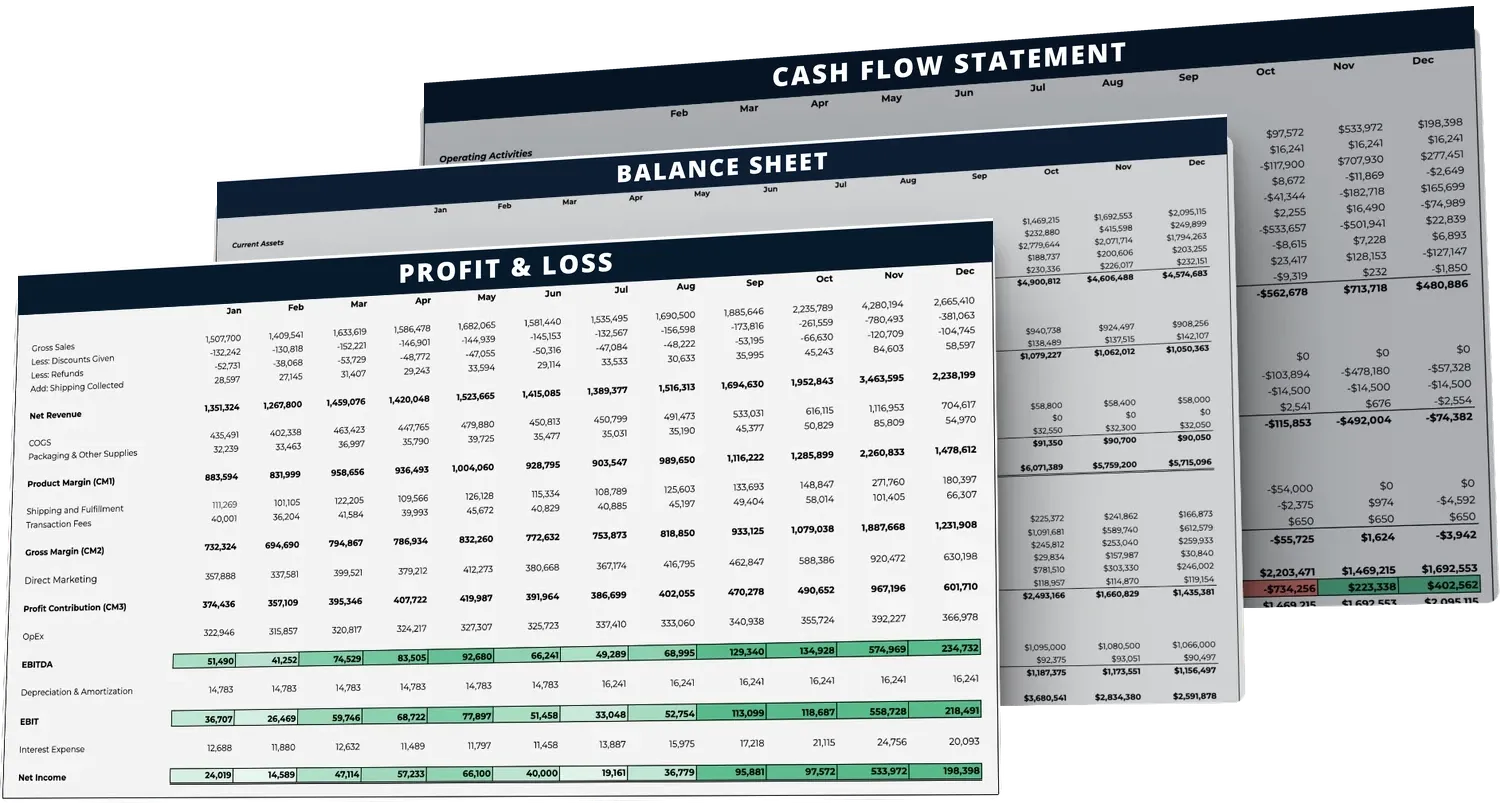
Get three statements,
and know how to use them.
Integrates with the Cash Unlock tool and works with your own three statements. Built for use with this course. Not included anywhere else.
P&L, balance sheet, cash flow statement, plus the full financial ratio set and unit economics breakdown.
“…someone like Valentin can be really helpful… to advise you on where to allocate your resources so they can actually move the needle…”
Donal Breslin · Managing Director, Nomad the Label · 8 figure apparel brand, Australia

“I’ve worked with Valentin on a bunch of projects… he’s great with finances, operations, and linking it all back to marketing.”

“Val is my go-to guy for any eCommerce client that needs financial expertise… I’ve introduced him to several of my clients.”

“Val excels at simplifying complex concepts… his ability to build models paints a clear picture of profitability and cash flow.”

“Most CFOs are proficient with cashflow, P&Ls… what sets Val apart is his thorough understanding of Marketing.”
Speak the language that moves capital
- Know where money is being made, and where it's leaking
- Know what the business can spend before cash runs out
- Know why the P&L shows profit but the cash isn't there
- Then put the money to its highest and best use
Three statements,
three points in time

“When hedge funds or private equity firms or aggregators look at DTC brands… they evaluate all three financial statements together, not just the P&L.”
P&L: future
- Why most P&Ls are useless, and 8 ways to fix this
- Using the P&L like an operator, not an accountant
- Building your own Operator's P&L with the DTC Growth System
- Two full real DTC P&L teardowns
Balance Sheet: present
- The statement nobody on the growth side ever opens
- What the business owns vs what it owes
- Working capital, and why so many brands can't break the $20M ceiling
- Five ways to action your own balance sheet
Cash Flow Statement: past
- The only statement that can't be dressed up
- Where the money came from, and where it went
- Why positive cash flow isn't always a good sign
- How much profit the business needs to fund growth
Built to be implemented
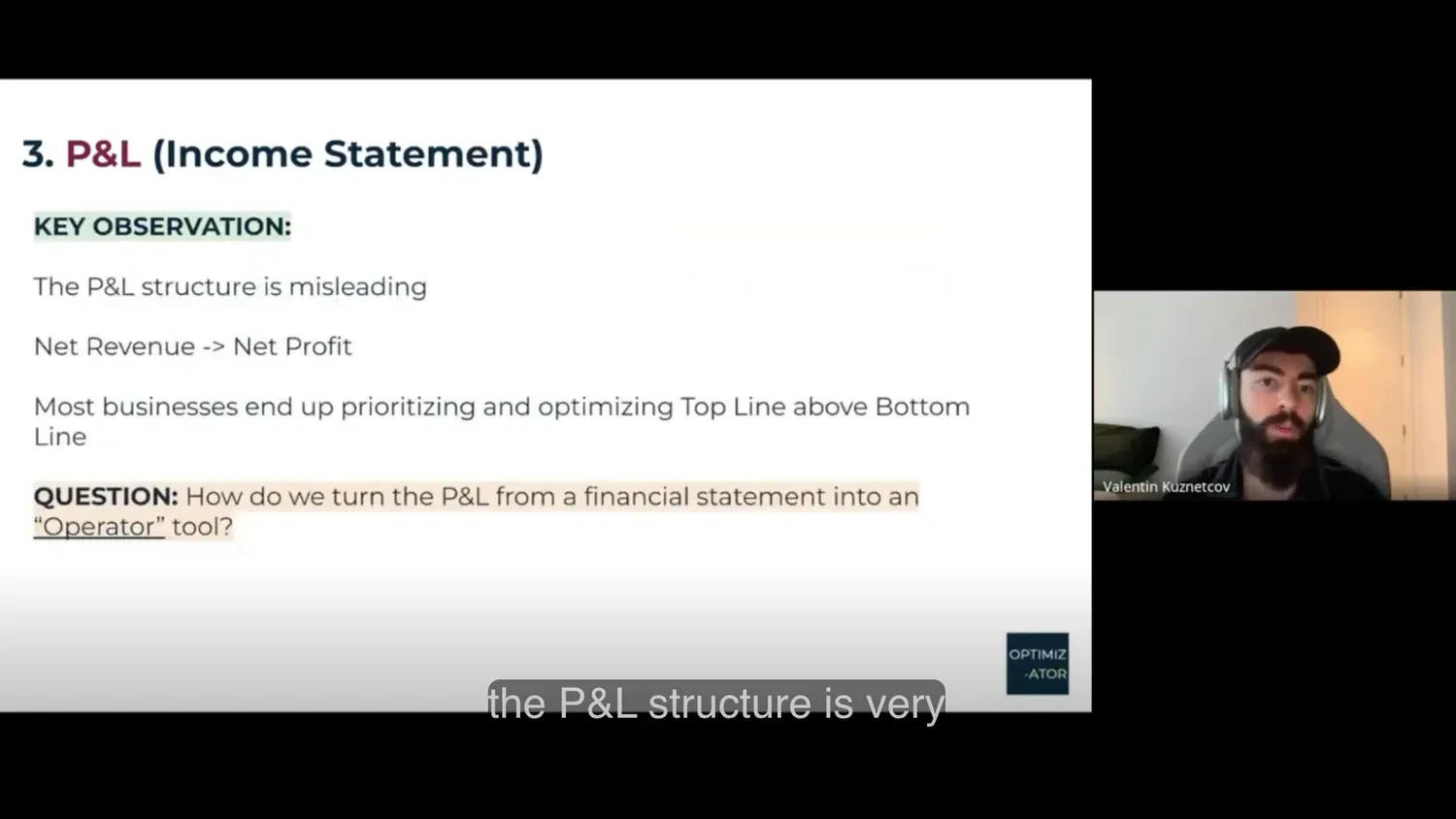
Short lessons, structured
One concept at a time, each no longer than 15 minutes. Watch them in order or go straight to what you need.
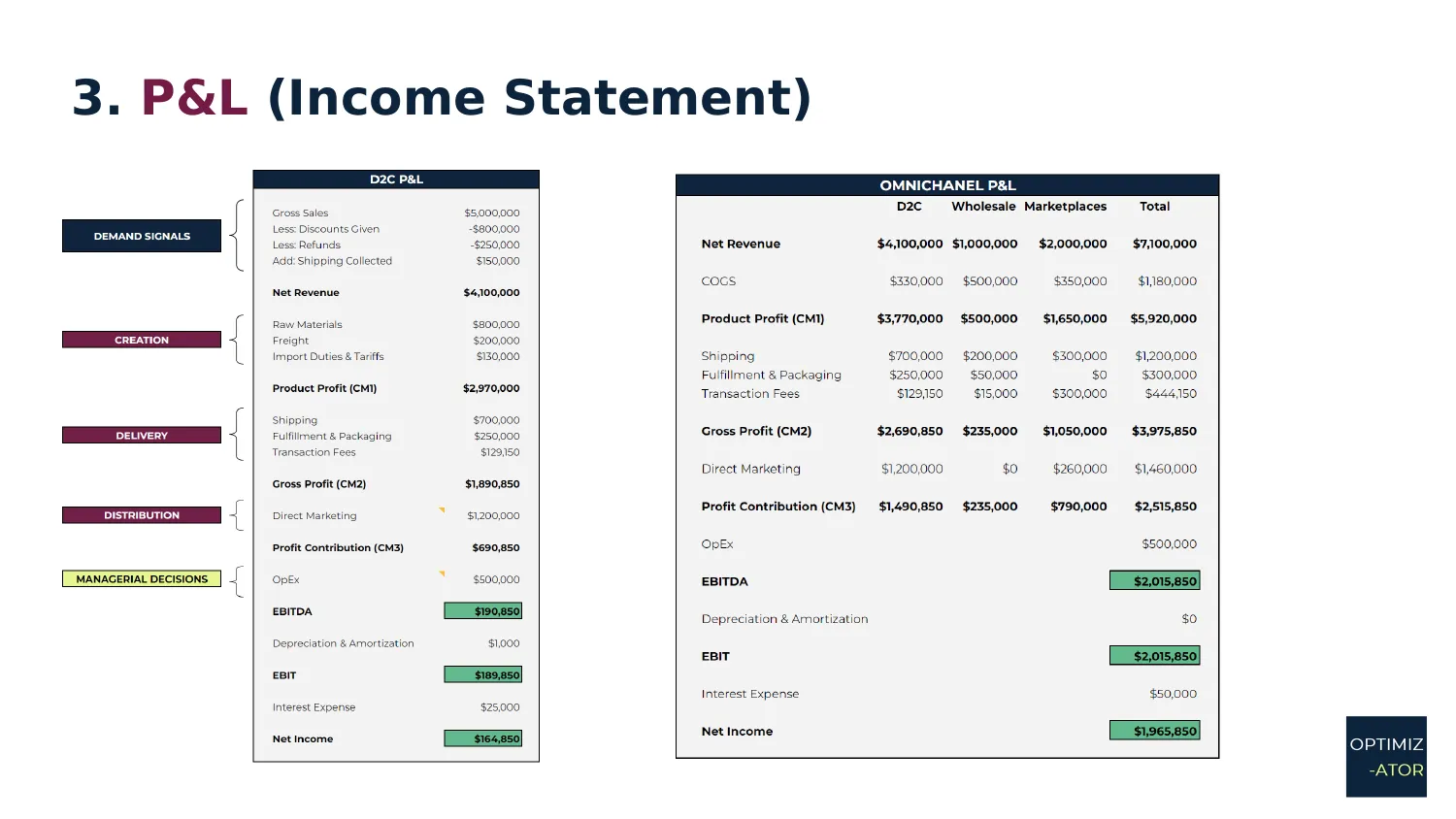
Visuals that make the concepts click
Every section comes with a deck of frameworks and visuals you'll keep pulling up long after you've finished the lessons.

A quiz to close every section
Test what you've learned on each statement, then take the final.
The full curriculum
- Lessons
- 33
- Sections
- 13
- Quizzes
- 4
- Run time
- 3h 38m
Start here
Why three statements · 1 lesson
- Why there are three statements, not one
P&L
Future · 19 lessons
What it is, why it matters
- What the P&L is and why it matters
- Parts of the P&L
- OPEX buckets
- Key metrics for performance
Using the P&L as an operator
- Why accountants and operators fight
- OPEX buckets revisited, and what to cut first
- Top line or bottom line?
- Why most P&Ls are useless, and 8 ways to fix them
- Beyond the P&L: why profit isn’t cash
Two real P&L teardowns
- P&L Teardown 1 5 lessons
- P&L Teardown 2 4 lessons
- P&L section quiz Quiz
Balance Sheet
Present · 5 lessons
- What the Balance Sheet is and why it matters
- Parts of the Balance Sheet
- Working capital: why so many brands can’t break the $20M ceiling
- 5 ways to action the Balance Sheet
- Balance Sheet section quiz Quiz
Cash Flow Statement
Past · 4 lessons
- What the Cash Flow Statement is and why it matters
- Parts of the Cash Flow Statement
- How much profit does the business actually need?
- Cash Flow section quiz Quiz
Put it to work
All three together · 4 lessons
The three statements in action
- Real-life example 1
- Real-life example 2
Build your own
- Populate and use your Financial Snapshot
- Final quiz Quiz
Also included
- Over 30 recorded sessions: P&L teardowns, forecasting, LTV to CAC payback, growth frameworks
- Real numbers from eight figure DTC brands, pulled apart on screen
- Organised by topic, so you can go straight to the one you're dealing with
- The full argument for why ROAS stopped being a useful number, and what replaces it
- Written for operators, not accountants
- Includes Kindle and PDF versions
- Bring your own brand for analysis, tackle your toughest questions
- Operators across DTC working on the same problems, at the same level
- Get expert answers
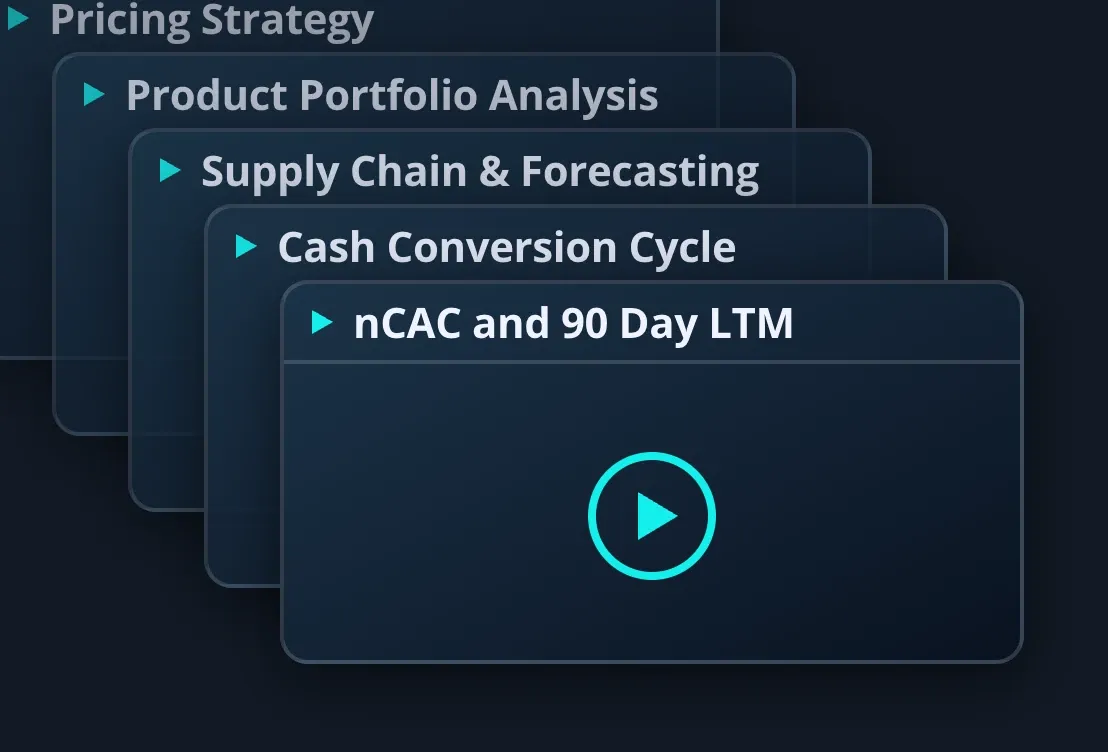
Live Workshop Vault
- Over 30 recorded sessions: P&L teardowns, forecasting, LTV to CAC payback, growth frameworks
- Real numbers from eight figure DTC brands, pulled apart on screen
- Organised by topic, so you can go straight to the one you're dealing with
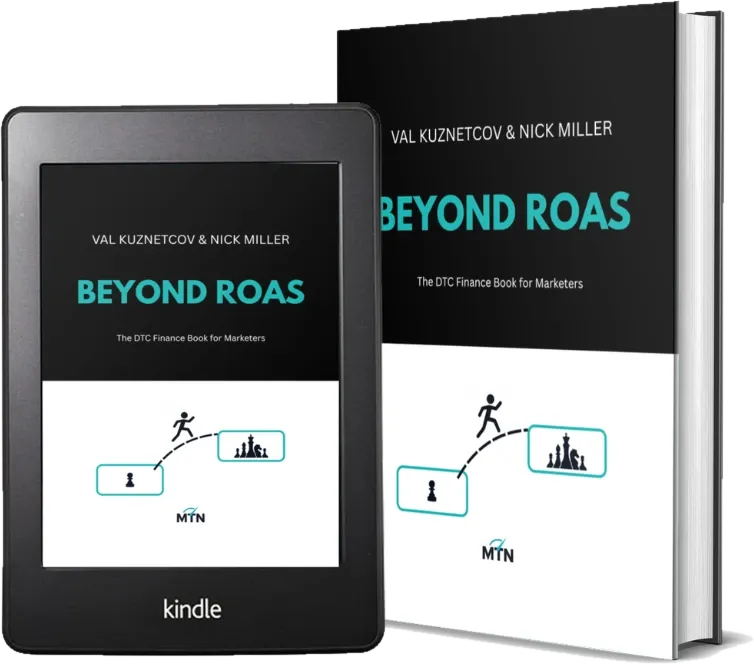
Beyond ROAS eBook
- The full argument for why ROAS stopped being a useful number, and what replaces it
- Written for operators, not accountants
- Includes Kindle and PDF versions
One month in the community
- Bring your own brand for analysis, tackle your toughest questions
- Operators across DTC working on the same problems, at the same level
- Get expert answers
Before you buy
Not for you if:
- You're new to DTC and still learning the basics
- You want ad hacks and tactics
- You're happy using ROAS to run the business
Perfect for you if:
- You know that more creative alone isn't going to break the ceiling
- You're ready to make better decisions about where the money goes
- You want to know how winning brands fund growth

Valentin Kuznetcov
I'm a fractional CFO to DTC brands, and I've sat in the Chief Growth Officer seat too, so I know what each side is up against.
Most of my work is directly with founders, helping them make better calls. I've also coached CFOs, CMOs, agency owners and performance marketers on how the two sides fit together.
I've thrived in DTC because of the gap between finance and marketing. I want to share everything I've learned, in the fastest way possible, because this industry never slows down.
Outside of work I'm deep into biohacking and energy optimisation, mostly around the nervous system.

Nick Miller
I'm a performance marketing operator with over $200M in managed ad spend, and a former head of traffic at a large DTC agency.
Leveling up in finance has been a huge unlock for my career. Now that I can see the whole picture, I help DTC brands in ways I couldn't before. This is what inspired me to create the Move the Needle Academy with Val.
Outside of work, I surf with my teenage kids and chase my toddler around.
Get started
Full Course. Lifetime access.
$497
Includes
- 33 lessons in manageable sections, with full slides and quizzes to lock it in
- The three financial statements, read the way an operator reads them
- Four real brand walkthroughs
- The Financial Snapshot, exclusive to this course
- The Needle profit scenario engine
- Starter version of the DTC Growth System
- Live Workshop Vault
- Beyond ROAS eBook
- One month in the Move the Needle community
Questions
Do I need a finance background?
No. The course is built for founders, agency owners and people who came up through marketing, creative or growth. It starts with why there are three statements at all, and builds from there.
How long does it take?
33 lessons across 13 sections, about 3 hours 38 minutes in total. No lesson runs longer than 15 minutes, so you can work through it in order or go straight to what you need.
How long do I have access?
Lifetime access. Come back to it whenever a decision needs it.
Where do I watch the lessons?
The lessons, the included tools and the bonuses are all hosted on Circle. You get immediate access as soon as you enrol.
Which tools are included?
Full versions of the Financial Snapshot, which includes the Cash Unlock tool, and the Needle, for finding your biggest profit opportunity. You also get the starter version of the DTC Growth System.